aosphere E-Signatures: A Practical Guide for Getting Documents Signed
You searched for aosphere e signatures expecting a signing tool. What you got was a legal risk management platform built by Allen & Overy. The confusion is fair: the term shows up in legal tech discussions, and the e-signature capability is real, but it sits inside a compliance suite aimed at in-house legal teams and large firms. This guide cuts through that noise. You'll learn what aosphere e-signatures actually are, how the signing workflow operates, whether the result holds up under US law, and where the platform falls short for everyday use. If your need is simpler, getting a contract signed and returned without a legal operations team, LoreSign handles that with a single secure link.
| At a glance | Details |
|---|---|
| What it is | Legal risk management platform with e-signature features |
| Primary users | Financial institutions, law firms, compliance teams |
| Legal validity | Compliant with ESIGN, UETA, and eIDAS |
| Best for | Regulatory research and compliance workflows |
| Not ideal for | Everyday contract signing and small business needs |
| Alternative | LoreSign for simple, secure document signing |
In This Guide
- What Are aosphere E-Signatures?
- aosphere vs LoreSign: Which Fits Your Signing Needs?
- How aosphere E-Signatures Work
- Aosphere E Signatures: A Step-by-Step Guide
- Legal Validity of aosphere E-Signatures
- aosphere E-Signatures vs. Mainstream E-Signature Tools
- Limitations of aosphere E-Signatures You Should Know
- How to Get Documents Signed with aosphere E-Signatures
- Common Mistakes When Using aosphere E-Signatures
What Are aosphere E-Signatures?
Aosphere e-signatures are the electronic signing feature inside aosphere, a legal risk management platform built by Allen & Overy. They are not a standalone signing app.
The term shows up in search results as if it were a product you can buy. It isn't. Aosphere is a subscription service for legal and compliance teams. E-signature is one capability inside it, sitting next to research tools, regulatory trackers, and document libraries.
aosphere: the platform behind the term
Aosphere launched as a way for Allen & Overy to sell its legal know-how as a subscription. Firms pay to access guidance on cross-border rules, data protection, and financial regulation. The platform is built for in-house counsel, not for someone who needs a contract signed this afternoon.
Where e-signatures fit in aosphere's offering
E-signature sits inside aosphere's document workflow, not as a separate product. You don't open aosphere to sign a PDF the way you would with DocuSign. You use it when a document already lives in the platform and needs execution as part of a compliance process.
Who aosphere is built for
Multinational legal teams. Banks, insurers, and large corporates that need regulatory certainty across jurisdictions. If you're a freelancer, a small business owner, or someone signing a lease, aosphere is not built for you.
[!note] aosphere is not a dedicated e-signature provider like DocuSign or Adobe Sign; its e-signature capabilities are part of a broader legal risk management suite, so the signing experience may be less streamlined than standalone tools.
aosphere vs LoreSign: Which Fits Your Signing Needs?
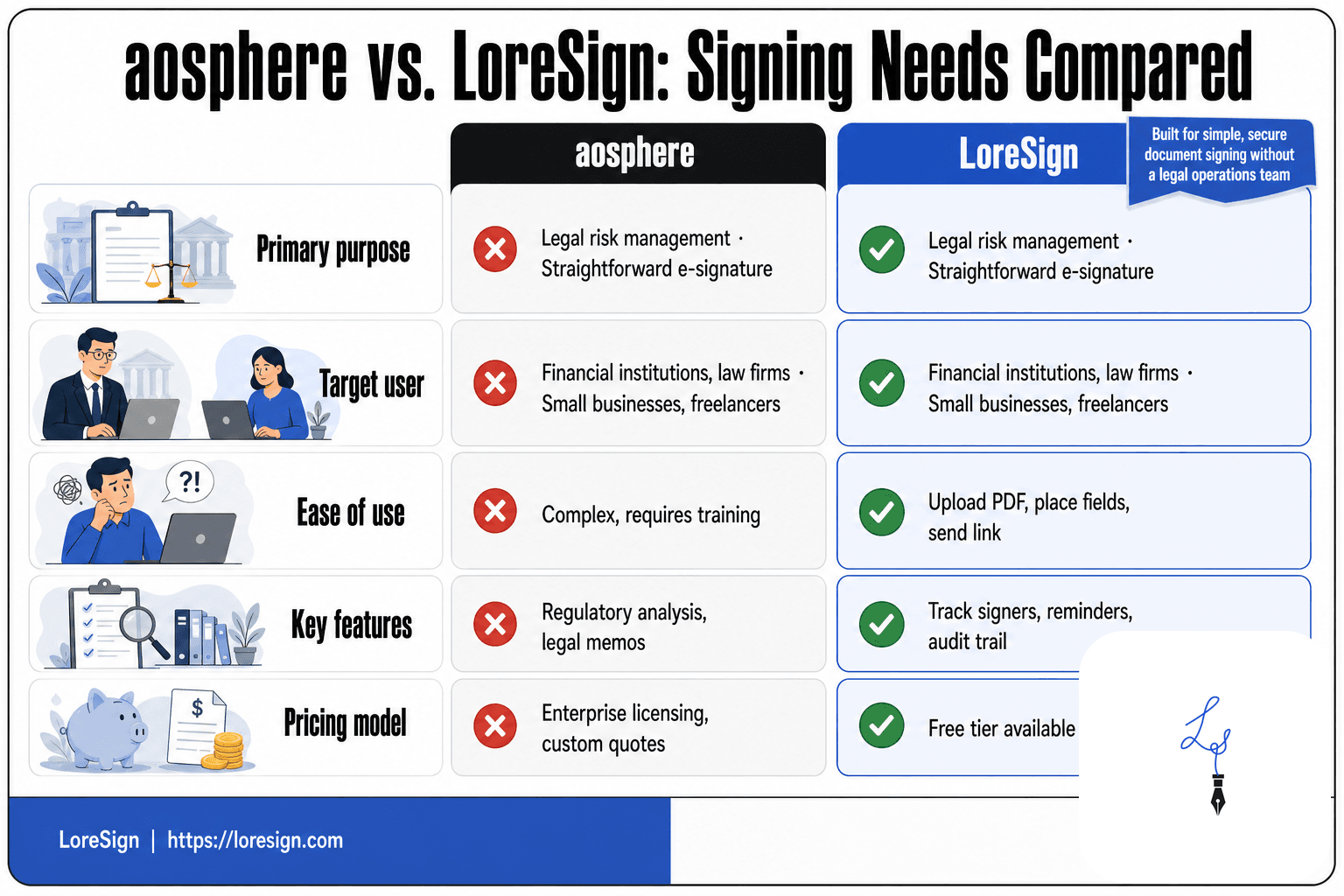
| Factor | aosphere | LoreSign |
|---|---|---|
| Primary purpose | Legal risk management and compliance research | Straightforward e-signature and document signing |
| Target user | Financial institutions, law firms, compliance teams | Small businesses, freelancers, professionals |
| Ease of use | Complex, requires training and onboarding | Simple: upload PDF, place fields, send link |
| Key features | Regulatory analysis, legal memos, some e-signature tools | Track signers, automated reminders, audit trail, templates |
| Pricing model | Enterprise licensing, custom quotes | Free tier available; paid plans for advanced features |
How aosphere E-Signatures Work
Aosphere's signing workflow assumes you already work inside the platform. You don't get a clean upload-and-send flow like a standalone e-signature tool. You get a document execution step bolted onto a compliance process.
The signing workflow step by step
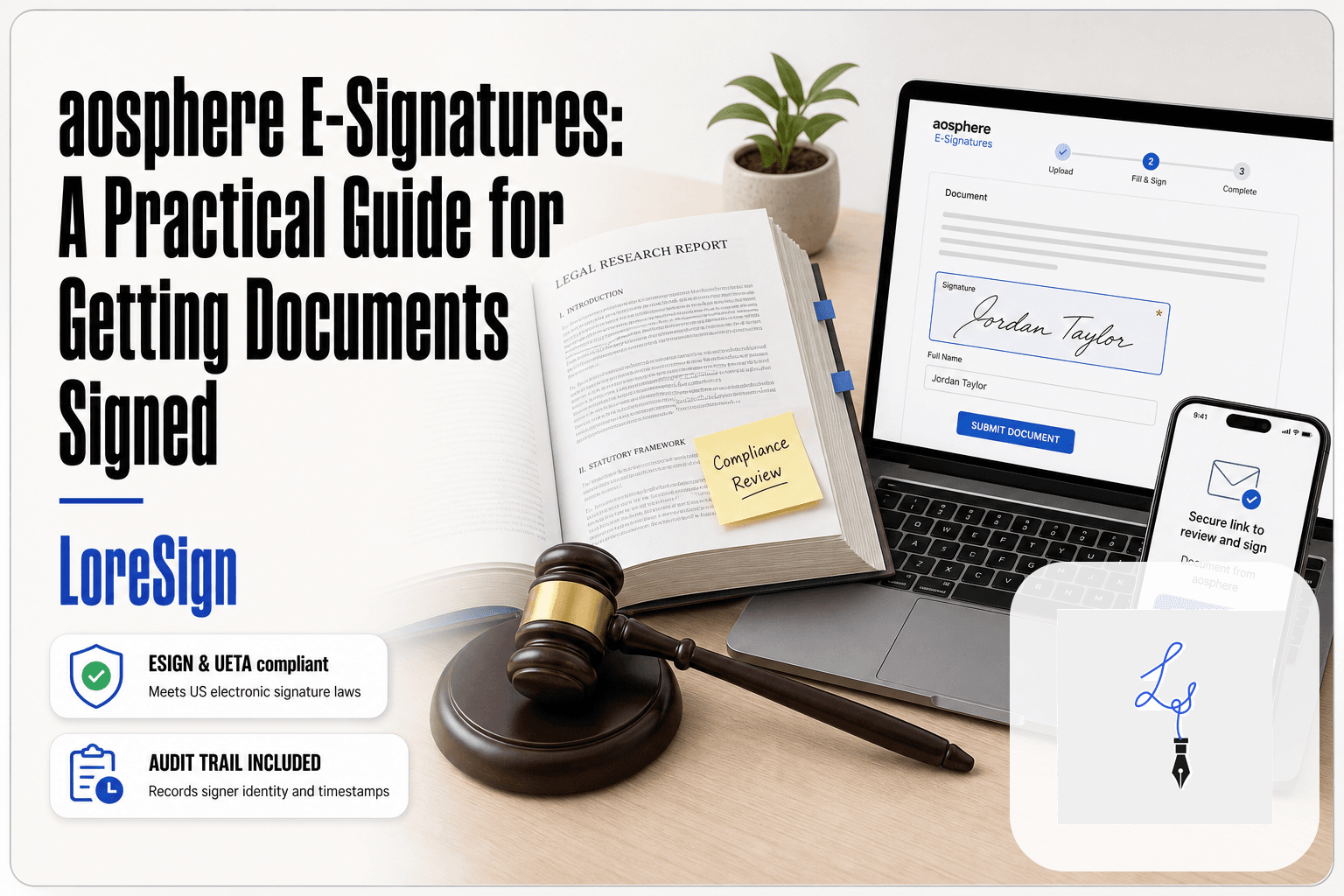
You start with a document already in aosphere's system. You place signature fields, assign signers, and send the request through the platform. Signers receive a link, open the document, and sign. The platform records each action.
For legal teams running multi-jurisdiction deals, that's useful. For someone who needs one contract signed today, it's heavy.
Authentication and signer verification
Aosphere ties signer identity to the platform's existing user accounts. That means signers need access to aosphere or a linked system before they can sign. There's no guest link that lets anyone sign without an account.
This is deliberate. Legal and compliance teams want to know exactly who signed and when. The trade-off is friction.
What happens after the document is signed
The signed document stays in aosphere's document store. You get an audit trail tied to the platform's compliance records. Retrieval means logging into aosphere, not downloading a PDF from an email.
If your signing needs are simple, this is more machinery than you need.
[!tip] If you only need to get contracts signed without the compliance research overhead, consider a dedicated e-signature tool like LoreSign that lets you upload any PDF, place fields, and send a secure link in minutes.
Aosphere E Signatures: A Step-by-Step Guide
- Confirm your organization has an active aosphere subscription that includes e-signature functionality.
- Log in to the aosphere platform and navigate to the e-signature or document execution module.
- Upload the document you need signed, ensuring it is in a supported format (typically PDF).
- Add signers by entering their names and email addresses, and specify the signing order if required.
- Place signature fields, date fields, and any other required information on the document.
- Send the document to signers and monitor progress through the platform's tracking dashboard.
- Once all signatures are collected, download the completed document and store it according to your compliance policy.
Legal Validity of aosphere E-Signatures
The legal framework is the same for aosphere as for any e-signature tool in the United States. What matters is not the brand, but whether the process meets the standards set by two laws.
ESIGN Act and UETA: the legal baseline
The ESIGN Act (2000) and UETA (adopted by 47 states) establish that electronic signatures carry the same legal weight as ink signatures. A signature is valid if it shows intent to sign and is attached to the document. No specific technology is required.
How aosphere meets compliance standards
Aosphere records signer identity, timestamps, and document integrity through its audit trail. That satisfies the intent and attribution requirements. The platform's authentication through existing user accounts adds a layer of proof that a standalone tool might not.
When an e-signature might not be enough
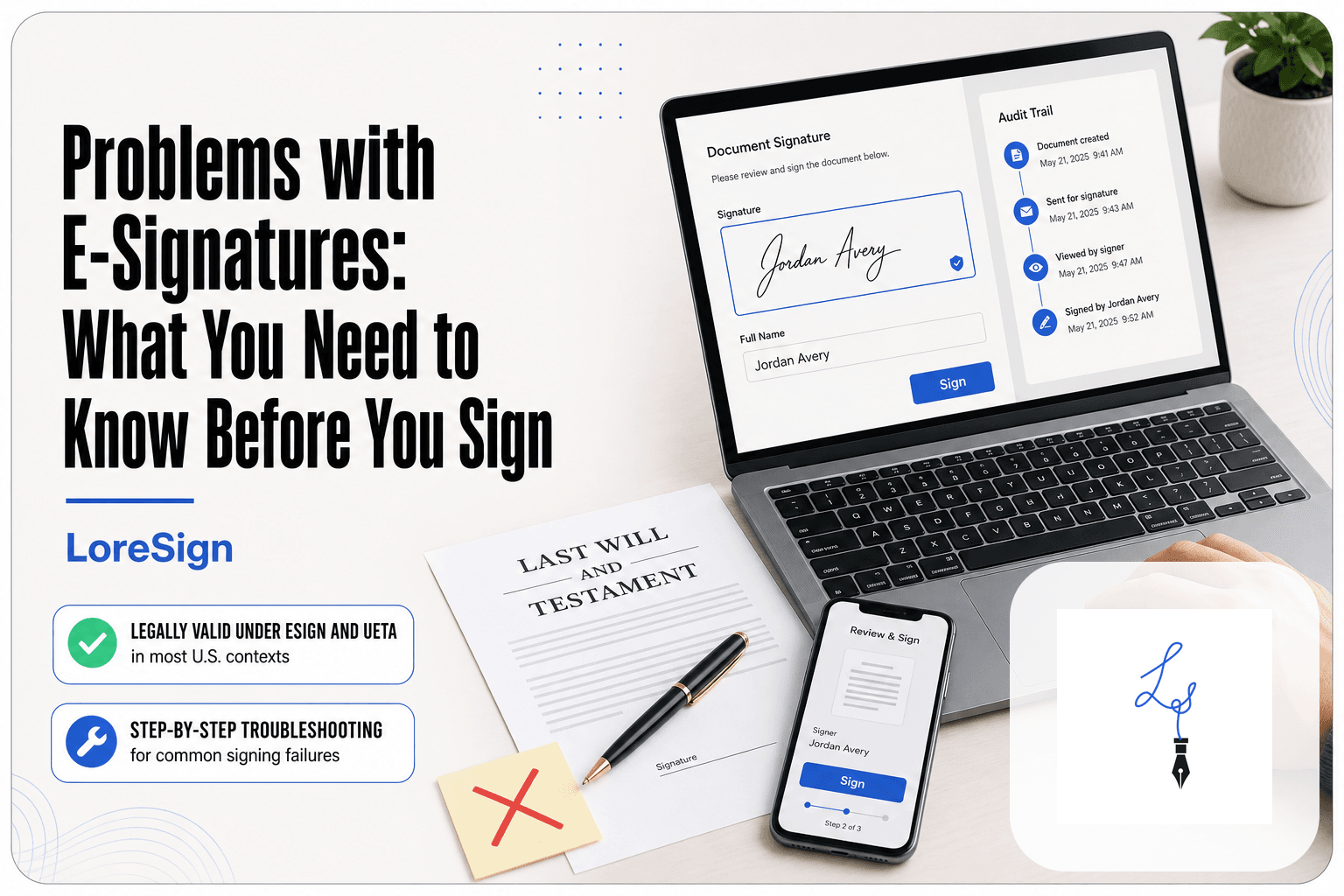
Some documents still require notarization or wet signatures: wills, certain family law filings, and some real estate transfers. Check your jurisdiction. E-signatures don't override state-specific formalities.
aosphere E-Signatures vs. Mainstream E-Signature Tools
Aosphere is not a direct competitor to DocuSign, Adobe Sign, or LoreSign. It's a legal risk management platform that happens to include e-signature capability. Comparing them head-to-head is like comparing a law library to a pen. Both can sign a document. Only one is built for that job alone.
aosphere vs. DocuSign
DocuSign is built for volume. You upload a document, drag signature fields, and send. Pricing starts around $10 to $15 per month for individuals (verify at publish). Aosphere assumes you already have a legal team and a compliance workflow. The signing step is one small part of a much larger contract management process.
aosphere vs. Adobe Sign
Adobe Sign integrates with Acrobat and the rest of the Adobe ecosystem. It's designed for business users who need signatures embedded in PDF workflows. Aosphere's e-signature sits inside a platform built for regulatory risk, cross-border compliance, and legal research. Different starting point, different user.
aosphere vs. LoreSign
LoreSign does one thing: get documents signed. You upload any PDF, place signing fields, and send one secure link. It tracks every signer and delivers the completed document automatically. No legal team required. Aosphere wraps signing inside a compliance suite that most individual users don't need.
When aosphere is the right choice
Choose aosphere if you're already using it for legal risk management and need signing as part of that workflow. Choose a mainstream tool if you just need a signed document back. The honest answer is that simple.
Limitations of aosphere E-Signatures You Should Know
Aosphere is not a signing app. It's a compliance platform with signing bolted on. That distinction creates real limits for anyone expecting a DocuSign-style experience.
No free tier or individual plan
There's no free trial, no pay-per-signature option, and no individual plan. Aosphere sells to law firms and corporate legal departments. If you're a freelancer or small business owner, you're not the customer.
Built for legal teams, not casual signers
The interface assumes you understand contract clauses, jurisdiction rules, and compliance workflows. A non-legal user will spend more time figuring out the platform than signing the document. That's not a flaw. It's a design choice.
Pricing transparency is limited
Aosphere doesn't publish pricing. You contact sales, describe your needs, and get a quote. Enterprise pricing means annual contracts and per-seat costs that make sense for a 50-person legal team, not a solo consultant.
Overkill for simple document signing
If you need one signature on a standard agreement, aosphere is the wrong tool. You'll pay for compliance features you'll never use. A basic e-signature tool does the job in minutes. Aosphere does it inside a system built for something else entirely.
How to Get Documents Signed with aosphere E-Signatures
If you've decided aosphere is the right fit, here's the workflow. It's not hard, but it assumes you know your way around a compliance platform.
Step 1: Set up your aosphere account
Contact sales and get an enterprise quote. You'll need a legal or compliance role to justify access. Once provisioned, your administrator assigns seats and permissions. Don't skip this step. Signer roles and document access are locked down by design.
Step 2: Prepare and upload your document
Upload the PDF or Word file into the platform. Aosphere checks the document against its compliance rules before signing starts. That check is the point. It flags clauses or missing fields that a basic e-signature tool would ignore.
Step 3: Add signers and signature fields
Add each signer by email and assign a role. Place signature fields, initials, and dates where needed. Authentication requirements are set per signer. Make sure you match the right signer to the right field. Fixing a mismatch after sending means starting over.
Step 4: Send and track the signing process
Send the document. Signers get a link and complete authentication before signing. You can track status in the dashboard: sent, viewed, signed, or declined. Automated reminders go out for unsigned documents. If a signer stalls, you'll see it.
Step 5: Retrieve and store signed documents
Once everyone signs, the completed PDF is delivered automatically. You get a certificate of completion and an audit trail. Download both and store them with the original document. That audit trail is what makes the signature defensible later.
Common Mistakes When Using aosphere E-Signatures
Most mistakes come from treating aosphere like a consumer signing app. It isn't.
Assuming it works like a consumer e-signature tool
You can't just upload a PDF, drop a signature field, and send. Aosphere runs compliance checks first. That's the point, but it also means the workflow is slower than DocuSign or LoreSign. Plan for that.
Skipping signer authentication
Authentication is mandatory, not optional. If you skip setting it up correctly, the signature won't hold up under scrutiny. Match each signer to the right role before sending.
Ignoring jurisdiction-specific requirements
E-signature laws vary by country. Aosphere flags some issues, but you still need to confirm the document meets local rules. Don't assume one workflow fits every deal.
Underestimating the setup time
Provisioning an enterprise account takes days, not minutes. If you need a document signed this afternoon, aosphere e signatures aren't the tool.
Frequently Asked Questions
What are aosphere e-signatures?
aosphere e-signatures refer to the electronic signature functionality within aosphere's legal risk management platform. It allows users to send documents for electronic signing, but it is not a standalone e-signature product. It is typically used by compliance and legal teams within financial institutions.
Are aosphere e-signatures legally binding?
Yes, electronic signatures executed through aosphere are generally legally binding in jurisdictions that recognize electronic signatures, such as under the ESIGN Act and UETA in the United States. However, specific legal validity depends on the nature of the document and applicable regulations.
How do I use aosphere for e-signatures?
To use aosphere for e-signatures, you need an active subscription that includes the e-signature module. After logging in, you can upload documents, add signers, place signature fields, and send the document for signing. The platform tracks the signing process and provides a completed copy once all parties have signed.
What are the limitations of aosphere e-signatures?
aosphere's e-signature features are designed for compliance-focused workflows and may not offer the same ease of use or advanced features as dedicated e-signature platforms. It may lack features like templates, automated reminders, or mobile signing, and is typically more expensive due to its enterprise focus.
Is aosphere a good alternative to DocuSign or Adobe Sign?
aosphere is not a direct alternative to DocuSign or Adobe Sign for general e-signature needs. It is best suited for organizations that already use aosphere for legal risk management and need basic e-signature capabilities within that ecosystem. For everyday signing, dedicated tools are often more practical.
Can I use aosphere e-signatures for free?
No, aosphere does not offer a free tier for its e-signature functionality. It is a paid enterprise platform, and pricing is typically customized based on the organization's needs. For free or low-cost e-signature options, consider dedicated tools like LoreSign.
What is a simpler alternative to aosphere for e-signatures?
LoreSign is a simpler alternative for everyday e-signatures. It allows you to upload any PDF, place signing fields, and send a secure link to signers. It includes features like automated reminders, audit trails, and templates, making it ideal for small businesses and professionals who need a straightforward signing solution.
About LoreSign
LoreSign helps For people looking to get documents and contracts signed. get this right. Track every signer and receive the completed document automatically. Whether you are working through aosphere e signatures or something adjacent, we publish what we have actually tested, including where it falls short.